Potentially, for eligible UK patients.
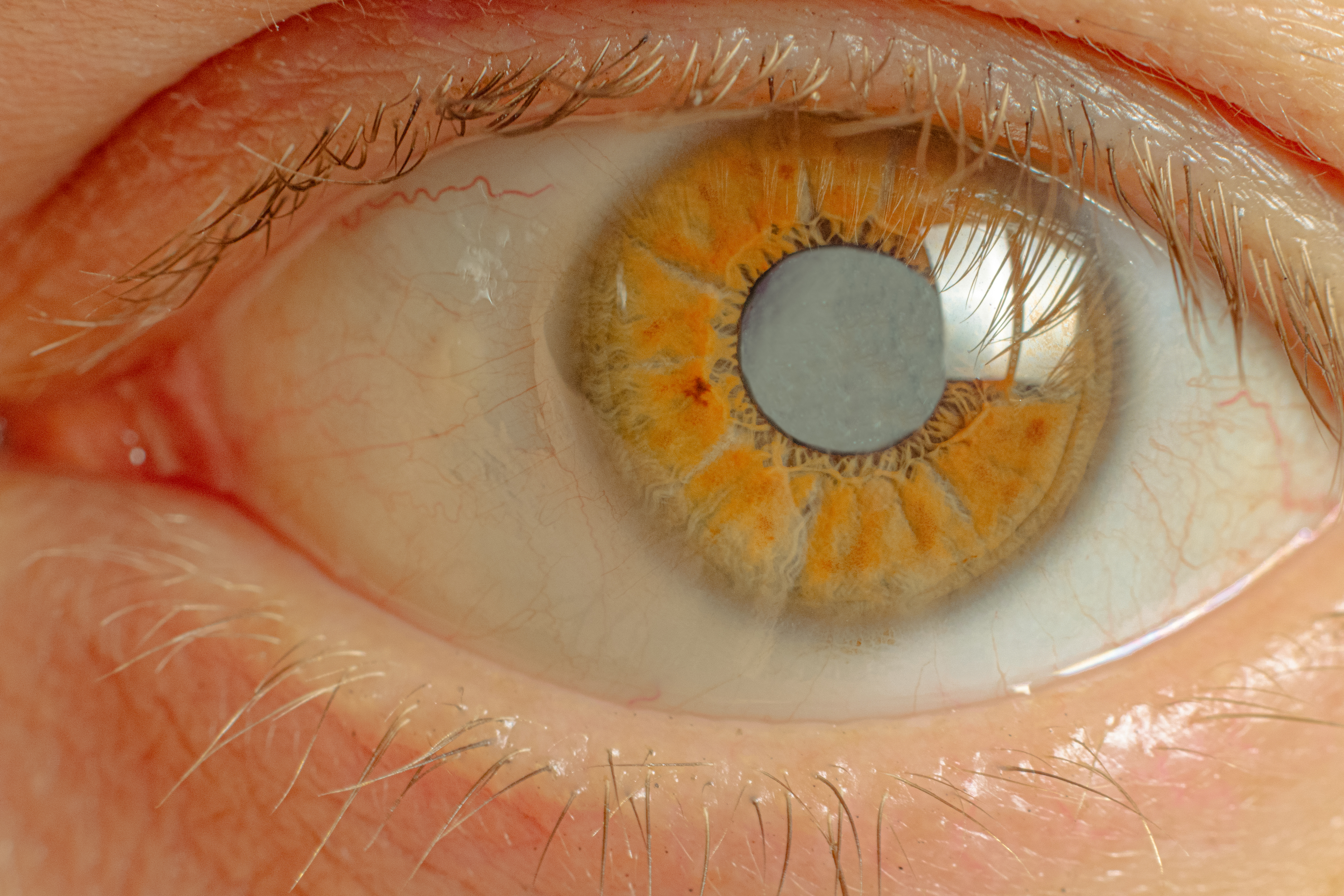
Episcleritis is an inflammatory condition that specifically affects the clear, blood-vessel-rich layer of tissue between the white of the eye and the overlying membrane, called the episclera. Although it does not typically impair vision, swelling and irritation can cause mild soreness, eye redness or what is often described as a ‘gritty sensation’ in the eye.
While the exact cause is unknown, it can be linked to systemic inflammatory diseases such as rheumatoid arthritis, Crohn’s Disease and Lupus, where widespread inflammation affects multiple organs and tissues throughout the body.
It is possible to access medical cannabis for episcleritis symptoms in the UK if you have already tried two or more standard treatments.
What symptoms does episcleritis cause?
People with episcleritis tend to experience localised redness, aching and soreness in the eye. It’s also possible that the affected eye will be watery and have increased sensitivity to light. Episcleritis usually affects one eye rather than both and lasts around 7-10 days.
What is the link between episcleritis and systemic inflammatory conditions?
Systemic inflammatory conditions can trigger the release of ‘autoantibodies’, immune proteins that target and attack healthy cells or tissues. These are usually produced to fight off foreign threats (like viruses), but in inflammatory or autoimmune conditions, they mistakenly view parts of your own body as dangerous.
This can trigger inflammation in various organs and tissues, including the eyes, leading to co-occurring conditions such as episcleritis.
What treatments are currently available for episcleritis?
Episcleritis is a self-limiting condition (meaning it clears up on its own), so generally no treatments are available or prescribed.
There are alternative treatments for episcleritis, including medical cannabis, and standard treatments available to help manage mild discomfort caused by the inflammation, including lubricating eye drops. Oral anti-inflammatories or steroid drops may be prescribed if the condition is persistent.
Can medical cannabis treatment help with my episcleritis symptoms?
A number of cannabinoids, including CBD and THC, have been shown to have anti-inflammatory properties, which could potentially help with many inflammatory conditions. However, there are currently no studies indicating cannabis as a treatment for episcleritis.
Some studies suggest smoking cannabis may worsen eye irritation and eye dryness, but it’s illegal to smoke medical cannabis in the UK. Instead, medical cannabis can be prescribed in the form of cannabis flower to be vaporised, THC vapes, capsules, oil or pastilles.
Medical cannabis may be able to help alleviate any pain, anxiety or sleep issues experienced as a result of episcleritis symptoms.
How does the endocannabinoid system relate to episcleritis?
There is a growing body of evidence to suggest that the modulation (adjustment) of the endocannabinoid system holds potential for the treatment of a range of ocular diseases and conditions.
Both CB1 and CB2 endocannabinoid receptors and endocannabinoids are highly expressed in the human eye, including in the cornea, ciliary body and ciliary process, trabecular meshwork, retina, and iris. Cannabinoids from medical cannabis can activate these receptors and potentially help to restore balance.
What does the research say about cannabis and episcleritis?
There are currently no studies researching the effects of medical cannabis for episcleritis, but there are many studies suggesting that cannabis can be used to improve symptoms that may arise as a result of episcleritis, such as anxiety and pain.
What forms of Releaf medical cannabis can be prescribed for episcleritis?
If you are eligible for medical cannabis for episcleritis, members of Releaf’s world-class clinical team can prescribe medical cannabis strains to be vaporised, THC vapes, cannabis oil, cannabis capsules, and cannabis pastilles.
|
Forms of medical cannabis available
|
Description of product
|
|
Medical cannabis flower
|
A wide variety of medical cannabis flower is available on prescription, to be used with a vaporiser. Different cultivars of cannabis have varying levels cannabinoids and terpenes; you Releaf consultant will help you choose the flower that suits your needs best.
|
|
THC vapes
|
THC vape pens offer predictable dosing, fast onset, portability and simplicity. Cartridges contain a set ratio of cannabinoids and there’s no need to grind flower or fill. Just connect the cartridge to the device and inhale.
|
|
Cannabis oil
|
Releaf offers a diverse range of cannabis oils to suit many needs. Some offer a balanced hybrid of cannabinoids, while others are higher in CBD or THC.
|
|
Cannabis capsules
|
Cannabis capsules contain cannabis oil, but you can swallow them rather than hold the oil under your tongue. This is a great option for patients who don’t like the flavour of cannabis oil and would prefer not to vape.
|
|
Cannabis pastilles
|
Cannabis pastilles allow patients to take their medication in the form of a sweet. These have become increasingly popular among patients who value discretion and pleasant taste. As with all Releaf products these are highly regulated and contain precise levels of cannabinoids.
|
Am I eligible for UK medical cannabis treatment for episcleritis?
Releaf supports over 240,000 medical cannabis patients across the U.K, offering consultations online. Find out if you’re eligible for medical cannabis today by heading straight to our fast and cost free medical cannabis eligibility checker
FAQs on medical cannabis for episcleritis
Will medical cannabis affect my intraocular pressure or eye health?
Medical cannabis can temporarily lower intraocular pressure, particularly if it contains a higher level of THC. Some studies have indicated that CBD may increase eye pressure, but this will all be taken into account by your Releaf consultant.
Should I still see an ophthalmologist before I am prescribed medical cannabis?
Yes, it’s worth seeing an ophthalmologist before you are prescribed medical cannabis. You will need to have tried at least two standard treatments or therapies before being eligible for a medical cannabis prescription for episcleritis, and it’s important to see a doctor who can perform comprehensive eye exams for any eye issues.
Can cannabis help with the anxiety of recurring episcleritis?
Yes, medical cannabis is frequently prescribed by Releaf clinicians for anxiety and anxiety-related issues. Numerous studies researching the benefits of medical cannabis have found the right dose of cannabis can have a positive effect on anxiety.