Indica vs. Sativa: What’s the difference and which cultivar is right for you?
Indica vs. Sativa: What’s the difference and which cultivar is right for you?
25 min read
Patrick Bawn
When researching medical cannabis, you’ll likely encounter the terms ‘indica’ and ‘sativa’ before too long. These simply refer to the two conventional classifications of the Cannabis sativa L. plant.
Indica is historically associated with offering relaxing, sedating, body-focused effects. Meanwhile, sativa is more commonly linked to uplifting, cerebral and energising experiences.
But, as with most topics surrounding medical cannabis, there’s a lot more to it than that.
In this guide, we break down everything you need to know about the differences between indica and sativa. From the latest research to the conditions they’re commonly recommended for, let’s get into it.
Key takeaways
The terms ‘indica’ and ‘sativa’ have been used to describe cannabis for hundreds of years
Indica has traditionally been associated with relaxing properties, while sativa is better known for its uplifting, energising effects
Within scientific research, classifying cannabis cultivars as either ‘indica’ or ‘sativa’ has become outdated over the years
Many experts now believe that a product’s cannabinoid and terpene profile outlines its effects far more than the indica or sativa label
Cannabis cultivars are now largely defined based on their specific chemovar or chemotype
In the UK, medical cannabis is prescribed based on the cultivar’s chemical composition and a patient’s clinical needs, rather than the plant type
Contents
What’s the difference between indica and sativa?
The main differences between Cannabis indica and Cannabis sativa relate to their plant structure and the effects they can cause.
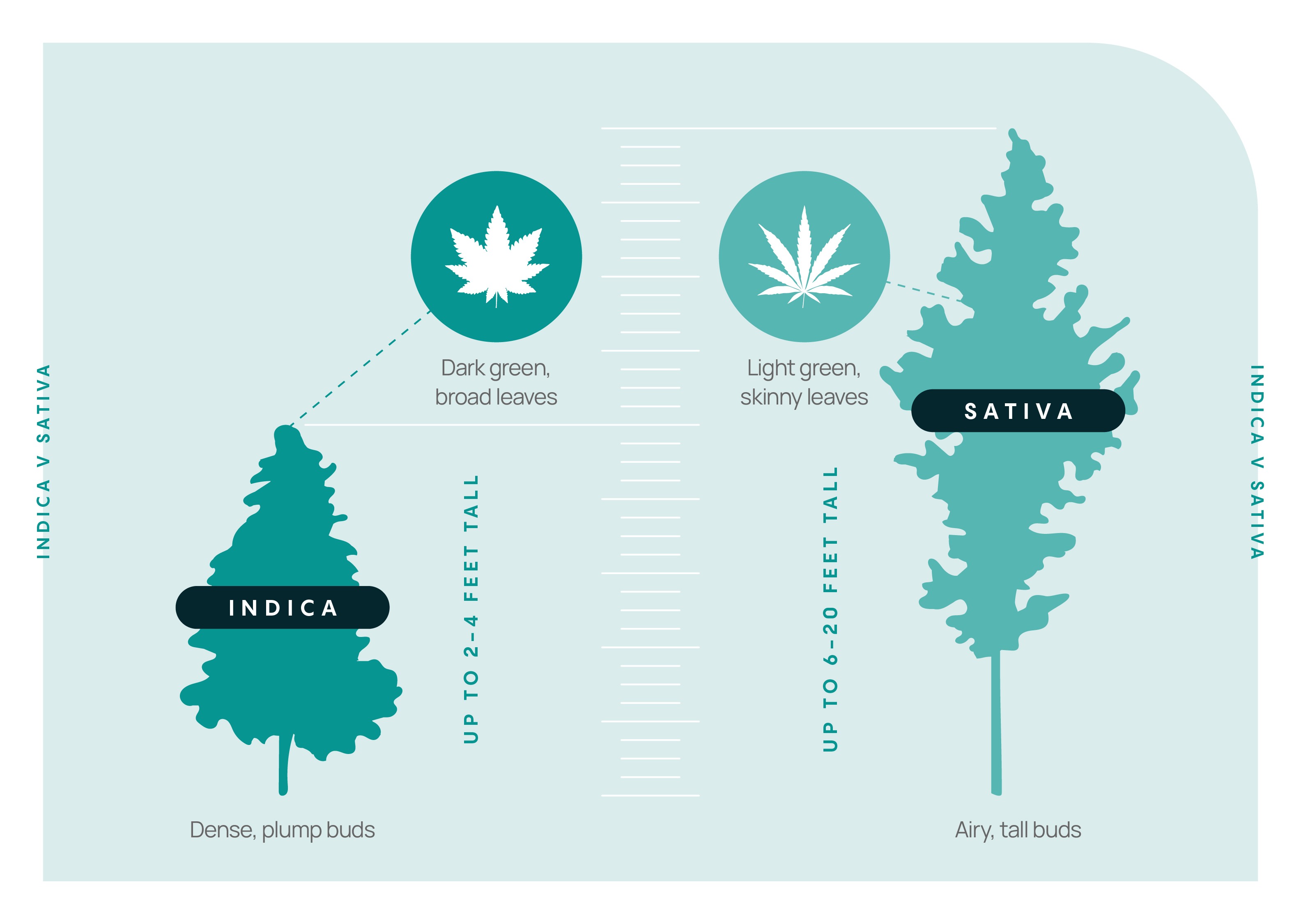
Sativa plants tend to be taller, with thin leaves and are associated with offering more of an energising, heady effect. Indica plants, on the other hand, are short and bushy and are more commonly known for their calming properties.
Here’s a quick breakdown outlining the main differences between the two cultivars:
General characteristics
Indica (traditional)
Sativa (traditional)
Associated effects
Relaxing and calming, often described as a ‘body-heavy’, sedating sensation
Uplifting and stimulating, often described as offering a ‘head-focused’ effect or ‘cerebral’ experience
Typical time of administration
Afternoon or evening, when winding down for the day
During the day, when being more alert or clearer mentally may help
Proposed benefits
Physical comfort and relaxation
Focus, mood, concentration and sociability
Plant appearance
Shorter and bushier, with broad leaves
Taller and gappier, with narrower leaves
When would indica be recommended over sativa?
While there is currently limited scientific evidence, indica-dominant cultivars are generally believed to have a sedative and relaxing effect, helping ease mental tension and creating a more reflective or inward-focused state of being.
These mental effects are also said to result in a strong physical sensation throughout the body, encouraging the muscles to relax and offer potential pain relief.
For these reasons, they may be favoured by specialist clinicians to manage conditions like:
This is actually where there’s often a lot of misleading information online, leaving many people confused when looking into the differences between the two cultivars.
Some blogs will say that indica plants produce more THC, while others will say sativa plants generally have higher levels of CBD. But neither of these statements is necessarily true.
In today’s highly regulated world of medical cannabis, hybrid cultivars rule supreme and cannabinoid dosages can be carefully monitored, regardless of their indica or sativa label (but more on that later!).
When would sativa be recommended over indica?
Sativa-dominant cultivars are generally associated with a more uplifting or energising experience, with patients often taking them during the day to improve attributes like creativity, focus and sociability.
For this reason, clinicians sometimes offer sativa cultivars to help alleviate symptoms of various mental health-related conditions, such as:
That said, this isn’t a hard-and-fast rule for every patient. Clinicians will look much more closely at what a cultivar actually contains, in terms of its overall cannabinoid profile, than whether it’s labelled indica or sativa.
Anxiety is a good example of this, which is why we’ve covered it in its own section below.
Is indica or sativa better for anxiety?
Cannabis can affect people with anxiety differently, depending on the cannabinoid ratio and their individual sensitivity to it. Again, it’s more about what the cultivar contains, rather than whether it's sativa or indica.
For example, products that contain CBD alongside THC may be considered more useful in certain contexts, as THC-dominant products have been shown to sometimes increase the levels of anxiety in some patients.
But there is no ‘one-size-fits-all’ treatment, so only a specialist will be able to help identify the right cultivar and cannabinoid profile for your anxiety-based symptoms.
Which is better for sleep: indica or sativa?
For a long time, indica was generally viewed as a better option for relaxation and sleep.
But newer research is now showing that this may not always be the case, with the cannabinoid and terpene profile of a specific cultivar being more important than broad classifications such as indica or sativa.
In other words, the potential sleep benefits stem from the cannabinoids and other compounds in the cultivar, rather than its ‘indica’ or ‘sativa’ plant profile.
How do indica and sativa cultivars influence pain?
Currently, there’s no evidence to indicate whether indica or sativa is better for managing pain.
While indica has generally been seen as the go-to option for its relaxing, sedating effects, it’s the cannabinoid profile that dictates how much influence the cultivar has on pain-related symptoms.
For example, many studies that analyse the impact of cannabis for chronic pain tend to group products by their THC and CBD content, rather than the indica or sativa label they have.
How can you tell the difference between indica and sativa?
Indica and sativa cannabis cultivars evolved in very different climates, and those environmental pressures have had a huge impact on how they’re grown today and, ultimately, what they look like.
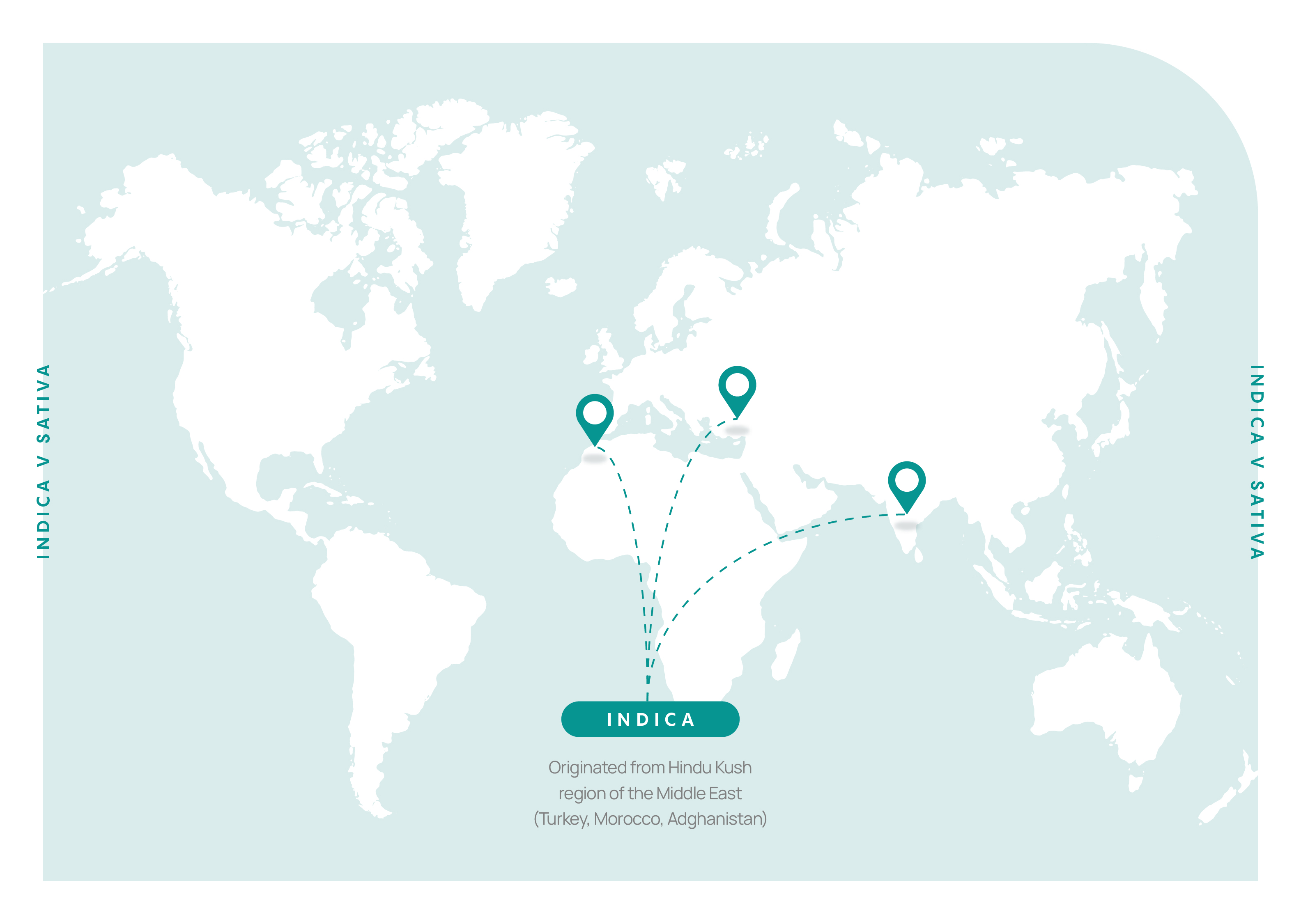
Indica plants are thought to have originated in the northern regions of the subcontinent and the Middle East, mainly in the mountainous regions of Afghanistan, Pakistan and Turkestan.
The plants themselves are typically shorter and bushier with wider leaves and a tighter flower structure. They have also evolved in colder, harsher climates than their sativa counterparts, which is why they generally have shorter life cycles and faster flowering times.
Due to the climate in these areas, sativa plants have evolved to develop longer, more loosely formed flowers, with a structure designed to lower the likelihood of mould forming.
Here’s a quick breakdown of both plants’ morphology and some key differences between the two.
Faster vegetative growth in controlled environments, faster flowering period
Slower initial growth and slower flowering period
Flowering time
Shorter flowering period
Longer flowering period
Resin production
Often high, with dense trichome coverage
Can be high, but more variable
Climate adaptation
Cooler, mountainous regions
Warmer, tropical regions
Mould resistance
Lower due to dense buds
Higher due to airier bud structure
Yield pattern
More consistent, compact yields
Potential for larger yields outdoors
What is the history of indica and sativa?
To fully understand the differences between indica and sativa, we need to go back in time a little. So, welcome to Cannabis History 101.
Cannabis sativa L. is the scientific name for the cannabis genus.
It originates from all the way back in 1753 when Swedish biologist Carl Linnaeus published a book called ‘Species Plantarum’, classifying all cannabis plants under the ‘Cannabis sativa L.’ label.
‘Cannabis’ was classed as the genus
‘Sativa’ was classed as the species (coming from the Latin word ‘sativum’, which means cultivated)
The ‘L.’ simply represents Linnaeus’ system
Fast-forwarding 32 years, a French biologist called Jean-Baptiste Lamarck proposed separating cannabis into two distinct species: ‘Cannabis sativa’ and ‘Cannabis indica’.
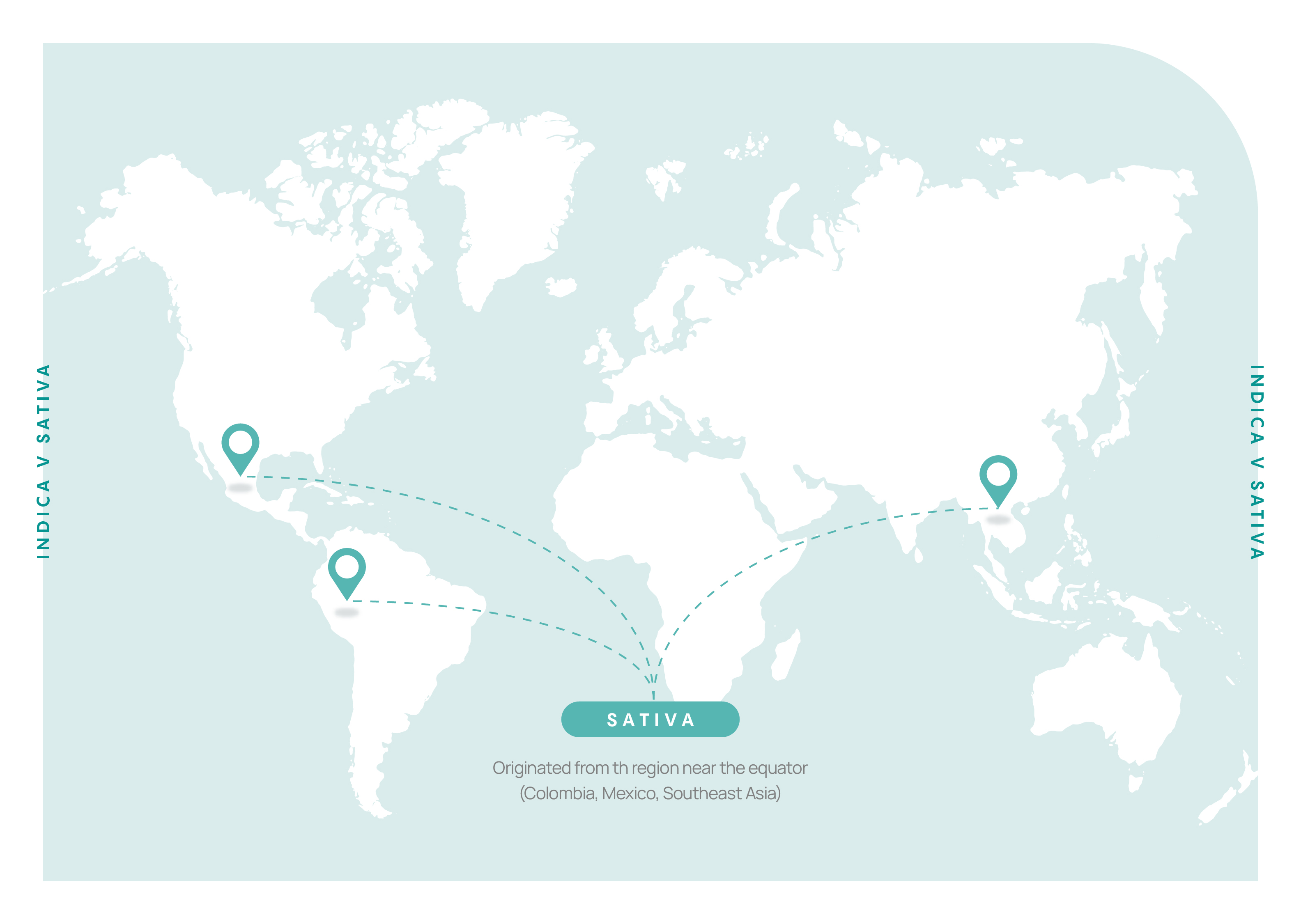
This was due to the belief at the time that Cannabis indica cultivars had specifically originated from India, unlike the Cannabis sativa cultivars that were thought to grow in equatorial climates across Africa, the Caribbean and Central America.
Almost three centuries on, most scientists and researchers now tend to agree that all cannabis cultivars come from a single species with different varieties or subspecies, instead of completely separate species.
In other words, all cannabis subspecies – whether that’s indica, sativa or other forms like ruderalis – can interbreed and produce fertile seeds. So while they may produce different subspecies, their biological makeup proves they’re from the same species overall. Still with me?
As a result, this explains why the differences associated with ‘indica’ or ‘sativa’ labels typically reflect the plant structure, geographic origin and chemical composition, rather than separate botanical species.
What is the difference between indica, sativa and hybrid cultivars?
When indica and sativa plants cross-breed, they can create what’s referred to as a hybrid cultivar.
While these can sometimes occur naturally, most hybrid cultivars are actually engineered by humans using selective breeding programmes.
By researching and selecting specific cannabis plants to cross-breed, cultivators can create specific cultivars that offer a mix of characteristics and attributes.
They can also manage certain factors associated with cannabis plant growth, including:
factors that influence how the plant grows
the cannabinoid profile and THC: CBD ratio
the ratio of terpenes
pest and disease prevention
overall yield
therapeutic potential
As a result, many of today’s cannabis cultivars contain genetics from multiple ancestral plant populations, including indica and sativa variants. In fact, almost all UK medical cannabis strains available to patients are hybrid.
So, what does this mean in terms of indica vs. sativa?
Well, since most forms of modern medical cannabis are hybridised cultivars designed to have a controlled chemical profile, the actual ‘indica’ and ‘sativa’ categories perhaps aren’t as relevant as they once were. And here’s why.
Why do scientists believe that the indica vs. sativa classification is outdated?
For almost 250 years, cannabis has been divided into one of two categories: indica and sativa.
These labels provide a convenient way to describe cannabis plants that have evolved in different parts of the world, and to predict how the effects of a particular cannabis cultivar might feel. But the full picture is more complicated.
As we’ve already established, the effects of a cannabis cultivar are more closely tied to its chemical composition than whether it's sativa or indica. And this specific composition can impact everybody differently.
For instance, the same medical cannabis cultivar may produce unique therapeutic benefits in one patient, but have no effect on another. This is because factors like the dose, tolerance, metabolism and the specific cannabinoid and terpene profile all play a vital role in individual patient responses.
So, while the terms indica and sativa may have been used as a simple shorthand to describe how a particular cultivar might feel, they’re not as relevant as they once were.
What does the research say?
In short, most recent research shows that indica and sativa classifications do not reliably reflect the chemical makeup of the plant and, as a result, are not as important a focus of discussion as they once were.
This is a belief particularly supported by Dr Ethan Russo, one of the world's leading researchers in the field of medical cannabis.
In an interview published in the Cannabis and Cannabinoid Researchjournal back in 2016, he said: “There are biochemically distinct strains of Cannabis, but the sativa or indica distinction as commonly applied in the lay literature is total nonsense.”
The clinical research appears to agree here as well.
Back in 2022, researchers in the United States conducted a large-scale chemical analysis, mapping the cannabinoid and terpene diversity of almost 90,000 cannabis samples across six states.
What they found was fascinating: indica, sativa and hybrid labels often failed to match the plants’ cannabinoid and terpene composition.
This research essentially highlighted the limitations of using the traditional sativa and indica classifications and identified issues around cannabis where there is a lower level of regulation than the UK medical cannabis industry.
So, what actually determines the effects of a cannabis cultivar?
According to Dr Russo, it is the “degree of interbreeding and hybridisation” that determines what’s really in the cannabis plant, with the effects it causes reliant on having a “complete and accurate cannabinoid and terpenoid profile”.
In other words, it’s the ratio of cannabinoids and terpenes contained in the cannabis plant that determines the effect it has. So, let’s take a closer look at what this means in reality.
Cannabinoids: THC and CBD ratios
More than 100 cannabinoids have been isolated from Cannabis sativa L. plants, but the two ‘major cannabinoids’ are known as THC and CBD.
Both of these work by interacting with our internal endocannabinoid system, a complex cell signalling network responsible for regulating several bodily processes.
By binding to the CB1 and CB2 receptors housed within this system, these cannabinoids help to modulate how these receptors respond to the body’s own signalling molecules (called endocannabinoids). This can then result in the energising or calming effects associated with different cultivars.
What are terpenes?
Terpenes are far less discussed than cannabinoids, but they have their own therapeutic properties that can contribute to the overall effect of a medical cannabis treatment option.
These naturally occurring chemical compounds are found in plants (including cannabis plants) and are typically responsible for the smell, flavours and even colours they give off.
For this reason, they’re commonly used as aromatic herbs and form the basic component of several essential oils.
Within cannabis plants specifically, terpenes are also known to play a crucial role in what is known as the ‘entourage effect’.
But before we get into that, here’s a quick overview of the most common types of cannabis terpenes and the potential therapeutic effects they can offer.
May contribute to calming effects in some profiles
What is ‘the entourage effect’?
The ‘entourage effect’ is a theory which centres around the idea that cannabis is not a single chemical.
Instead, cannabis represents an ecosystem of compounds and other molecules that interact with each other inside the body to create a combined biological activity that offers greater or different effects than any single compound acting on its own.
So, how does this relate to the indica vs. sativa argument?
Essentially, if the full mix of cannabinoids and terpenes shapes how a cultivar works, classifying a plant by its height or leaf shape isn’t overly relevant.
What matters most is the chemistry. And that's exactly the shift scientists have started to make over recent years.
How do scientists classify cannabis?
Rather than assessing whether a cultivar is indica or sativa, researchers now describe what’s actually inside the cannabis plant using one of two key terms: chemovars and chemotypes.
What are cannabis chemovars?
‘Chemovar’ is short for ‘chemical variety’.
Instead of categorising plants by their physical appearance, chemovars focus on the chemical compounds the plant produces, including both cannabinoids and terpenes. In doing so, this helps to create a chemical fingerprint of each plant.
From a scientific perspective, this fingerprint provides far more useful information than traditional plant labels, like indica or sativa.
Two plants that look different may produce very similar chemical profiles, while plants labelled with the same cultivar name may vary considerably depending on how they are grown.
For this reason, many researchers now prefer to use chemovar classifications when discussing cannabis varieties.
What are cannabis chemotypes?
Chemotypes describe the dominant cannabinoid and terpene profile produced by a plant. There are three main forms:
Chemotype I: THC-dominant plants with relatively low CBD levels
Chemotype II: Balanced plants that produce both THC and CBD in similar proportions
Chemotype III: CBD-dominant plants with very little THC
These categories can help researchers and clinicians describe cannabis varieties based on their chemical composition rather than the traditional indica or sativa label.
Put simply, having a chemovar and chemotype available tells you exactly what’s in the medical cannabis plant, whereas the indica or sativa labels only really tell you what it looks like.
For anyone trying to predict how a cultivar might affect them, such as a clinician prescribing to a patient, it’s clear to see which is more useful to know than the other.
But this does also raise an obvious question. If science has moved on, why do you still see the words ‘indica’ and ‘sativa’ printed on so many medical cannabis products?
What do indica and sativa labels mean on medical cannabis products like vapes, oils and pastilles?
While the terminology that scientists and cannabis cultivators use may have moved on, the sativa and indica labels have been set in stone for centuries.
In other words, it’s not easy to simply remove them from medical cannabis products like THC vapes, oils, dried flower or pastilles.
These terms have essentially stuck around because they offer a quick, shorthand way of understanding what effect a particular product might have: energising if sativa, relaxing if indica.
However, in real terms, seeing either ‘sativa’ or ‘indica’ on a product simply describes the cultivar that the actual product was made from. It isn’t referring to the format or the cannabinoid profile contained inside, or the effects it may provide.
Two sativa products can have very different cannabinoid and terpene profiles, and it's that, not the label, that shapes each patient’s response.
But if the label on the packaging isn't the thing to go by, what is?
In practice, that decision doesn't sit with the patient at all. In the UK, medical cannabis can only be prescribed by a specialist clinician.
How do clinicians choose the right cannabis treatment?
As we’ve touched on already, there is no ’one-size-fits-all’ approach to medical cannabis treatment.
Instead, prescribing decisions will need to be made by a team of specialists based on factors like your diagnosis, medical history, lifestyle and any pre-existing medications you take.
Adopting a tailored approach to each patient in this way allows medical cannabis specialists with a high-level knowledge of cultivars available to identify the right choice for your needs.
What is the process of choosing cannabis treatments at Releaf?
If you’re deemed eligible for a medical cannabis prescription at Releaf, a specialist within our world-class clinical team will meet with you to discuss your symptoms, previous treatments and overall health goals in more detail.
Using this information, they will then be able to recommend a medical cannabis formulation that meets your specific needs, symptoms and way of life. This will typically be based on the cultivars’ specific chemical profile, rather than whether it’s a sativa or indica variant.
Your treatment will then be continually monitored over time, with careful dosage adjustments being made as and when required to ensure you’re always being prescribed the right cultivar for your condition.
Frequently asked questions about indica and sativa in medical cannabis prescribing
We think we’ve covered everything already, but if you’re keen to learn more about the differences between indica and sativa, we’ve got you covered. Here are some other common questions you may be pondering.
What are the potential side effects of taking indica or sativa?
Medical cannabis affects everyone differently, and most patients will only experience mild side effects from indica or sativa cultivars. The most commonly reported side effects tend to include:
Dry mouth
Dizziness
Fatigue
Increased heart rate
Appetite changes
If you do experience any side effects, please let your clinical team know. They will be able to adjust the dosage or form of treatment to help minimise any unwanted side effects.
How long do the effects of indica or sativa last?
Whether it’s inhaled, ingested or absorbed sublingually, medical cannabis can last for varying lengths of time depending on how it’s administered, rather than whether it's derived from an indica or sativa cannabis plant.
As a rough guide, inhaled cannabis tends to take effect more quickly but wears off faster too.
Ingested formats like capsules or pastilles usually take longer to kick in, but last longer once they do. Sublingual oils (taken under the tongue) tend to sit somewhere more in the middle.
For anything more specifically related to your dosage schedule, your consultant is always the best person to ask.
Do you feel more high on indica or sativa?
The intensity of the cultivar’s effect depends on its cannabinoid profile and the level of THC it contains, rather than whether it’s labelled indica or sativa.
For instance, two indica products that have different THC levels can feel completely different to one another. So the label won’t tell you how strong it is. Only the cannabinoid profile will.
Is indica an upper or a downer?
In traditional terms, indica is generally seen as more of a “downer”, due to the relaxing, sedating effects it can offer.
This is a bit of a generalisation though, as the real effect of the cultivar will depend on its chemical composition and how you respond to it.
Would indica or sativa be better for new medical cannabis patients?
This is a question that a specialist will need to answer.
By looking at your symptoms, medical history and diagnosis, they will be best-placed to identify whether medical cannabis is actually suitable for your needs. If it is, they’ll then be able to recommend a cultivar that meets your needs.
In other words, neither indica nor sativa is automatically better for new patients. It depends on your unique situation.
Why might someone not feel a difference between indica and sativa?
Medical cannabis affects everyone differently, and just because two cultivars may share the same label, they could contain very different ratios of cannabinoids and terpenes. This means they may feel nothing alike; one cultivar may leave you feeling relaxed, while the other may make no difference at all.
There’s also the individual tolerance, metabolism and dose factors to take into account. Medical cannabis isn’t suitable for everyone, so it’s important to speak to a clinician when looking to build a treatment plan around your symptoms.
So, which is better: indica or sativa?
There isn’t really a ‘better’ option between indica and sativa, as that’s not how the world of modern medical cannabis treatment works. And finding the right option doesn’t necessarily come down to a direct choice between the two.
Instead, it focuses on identifying the product’s chemical profile, tailoring the choice of cultivar to your symptoms and medical history, rather than the type of plant it came from.
The easiest way to find out which medical cannabis cultivar is most appropriate for your situation is to complete our medical cannabis eligibility checker.
It’s completely free to use, takes less than 20 seconds to complete and could help you determine whether medical cannabis treatment is suitable for your needs.
If you are eligible, you’ll then be able to speak to one of our specialists to discuss any questions you have around indica or sativa cultivars, or the type of prescription best suited to your condition.
It is important to seek medical advice before starting any new treatments. The patient advisors at Releaf are available to provide expert advice and support. Alternatively, click here to book a consultation with one of our specialist doctors.
Elevate your wellness with medical cannabis
Get comprehensive care, convenience, and confidence with an all-in-one treatment plan.
As of 12 August 2026, Releaf has the highest Trustpilot score, 4.8 from 9,598 reviews. Curaleaf received an overall CQC rating of ‘Good’, Alternaleaf advertises appointments for £29, while Mamedica's £200 Access Scheme is designed to potentially reduce long-term clinic costs. The right clinic for you will depend on what you value most from a clinic, but comparing the full treatment experience, rather than a single headline figure, is essential.
On the 7th July 2026, Releaf became the first medical cannabis clinic in the world to become B Corp certified. Verified by the non-profit B Lab, the certification sets in stone that Releaf is meeting the highest standard of social and environmental performance, transparency, and accountability, and has made a commitment to continue improving the way we serve not only our patients, but also our team, and the wider community.
We are proud to announce a new partnership between Releaf and brainstrust, the UK charity supporting people affected by a brain tumour. Together, we want to make sure that anyone living with a brain tumour has access to compassionate, expert care through the most trusted medical cannabis clinic in the UK. Here is what the partnership means and how patients currently in treatment can get in touch.
"Since starting my treatment plan with Releaf, I’m genuinely shocked at how well it has worked."