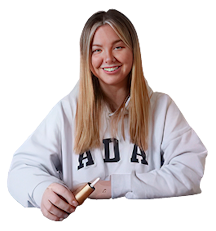
Patient StoriesMatt’s story: Managing Tourette’s, arthritis and anxiety with a Releaf prescription
Matt’s story: Managing Tourette’s, arthritis and anxiety with a Releaf prescription
Condition(s):
Tourette’s syndrome
Joined Releaf:
September 2024
Prescription Type:
Flower
Being diagnosed with Tourette’s in your 40s is not something any of us ever expect to face. For Matt, it arrived totally out of the blue during the isolation of COVID, reshaping his health, his work, the way he saw himself, and his ability to be comfortable in social situations. Added to the arthritis and anxiety he was already managing, it became a turning point that pushed him to explore alternative, holistic treatment options.
Medical cannabis has given Matt a measure of consistency in an uncertain time. It has helped him manage pain, ease anxiety, and create space for everyday life. He now feels so much more able to spend quality time with his family, travel overseas, dive into his hobbies, and get away in his camper van.
His experience shows how treatment can support not only symptoms, but also the routines and passions that give life shape and meaning.


What impact have your health conditions had on the way you live?
I’ve got a few different health issues. About four years ago, I was diagnosed with Tourette’s syndrome. I got diagnosed during COVID out of the blue, which was quite concerning. I’d had no real traits as a youngster, so as a guy in his 40s, it was a shock to the system. I’ve also got arthritis now, and also battle anxiety.
Initially, the social anxiety was a big thing. The diagnosis was a bit of a shock. I’d taken part in sports, but I wasn’t overly sociable. I loved being at home with my family, but when I wanted to go out and do something, I would. I did a lot of fishing, but the social anxiety just stopped me in my tracks.
I also got made redundant because of the Tourette’s. That had an effect. I control the tics quite well, but when I have outbursts I swear a lot and have motor tics and people watching me caused more anxiety.
I’ve moved past that now with self-therapy and with some of the sativa strains. The stronger ones make me hyperfocus on what I’m doing, so I’m not thinking about the anxiety. It’s very similar to CBD effects for me personally. For pain relief, some of the nighttime strains slow me down. If I’m ticking, I’m not as harsh. That reduces muscle pain and nerve damage. They’ve also helped with inflammation from arthritis.
How have your hobbies and passions helped you cope with your conditions?
Family time is very important for me. Getting away in the camper van with my partner and the dogs, being outdoors.
I also play a bit of snooker these days. I’ve always played since I was a teenager. My kids are grown up so I have flexibility and free time. I started snooker again before COVID after not playing for years, then COVID hit. During that time I became unwell with Tourette’s and backed away from anything like that, then I rejoined another group. The anxiety had subsided, so I play snooker as a group thing.
I don’t go fishing much now. COVID affected fishing because everyone could go and it was extremely busy. I might go once or twice a year for a social with friends, but before I was unwell I could fish 100 nights a year.
I also love to build and paint remote control cars, especially now that the Releaf medication is working so well. It’s something I’ve really enjoyed since I was a kid. We didn’t have a lot of money growing up, and I couldn’t afford things like that. They’re not big luxuries. I don’t go to the pub or waste money like that (although my partner might disagree with that last point), but it gives me something to hyperfocus on.
That’s part of my neurological disorders. I’ve been diagnosed with OCD. I don’t fully understand how that side of my brain works or what’s caused me to be like this. I’m an engineer by trade, so I’ve always been hands-on. Fishing was something I was good at and competitive with, but hobbies like this give me focus without competition. I haven’t been diagnosed with ADD or ADHD, but I suppose it falls under the same spectrum as the neurological side. Being hyperfocused helps take away intrusive thoughts.
In the early days of Tourette’s I had a lot of them, and doing something constructive helped. Painting one of these remote control car shells might cost £30, but it keeps me occupied for a few nights or a week.
The medication helps me be able to get me involved in things. I can be more sociable, more present, I’m more involved.
Can you tell me about your journey to becoming a Releaf patient?
Access to products was the main issue. I’d had a prescription with my previous clinic for 18 months or so. Then I stopped following it up, and around then other clinics were coming on board. I took a step back just to see what was of benefit to me, and I chose Releaf.
They weren’t the cheapest at the time, but comparatively speaking to what I see on forums and in groups, access to medication and services is top drawer with Releaf.
Although I have to watch finances because I don’t work full-time, I could go to a cheaper clinic, but up to now things have been fantastic with Releaf. The conversations I’ve had with admin staff or doctors, they all do listen to what patients are saying. Not that things change straight away, but I feel listened to.
The doctors are all quite insightful. I don’t profess to be a professional or understand everything there is to know about cannabis. That’s down to the doctors and the research.


What has your treatment with Releaf medical cannabis been like so far?
It’s been amazing. I really like how medical cannabis is more transparent with the product itself. There are different terpene profiles for different products, and I feel the products are clearly labelled and explained by my doctors in terms of what the effects will be, and how they will help, depending on the ailment.
I’m not saying that all black market cannabis was no good, sometimes I would get a flower that really settled me, but then I’d never be able to get it again. With Releaf, I can try a product and then look at what’s available and try something similar. Some haven’t worked for my needs, some have. It’s all about a bit of trial and error, and the doctors explained this to me when I first signed up.
It’s not just about THC percentage. Some of the better products I’ve used have been around 20% THC and worked well, especially for daytime functioning. Sativa dominant strains have really helped, but if I have too much in the day, I struggle to wind down at night.
It’s about balance and having access to different products so I’ll try to order a day strain and a night strain.
I give feedback and the doctor gives me recommendations. At the minute, and this isn’t just a Releaf issue, there’s been a real bottleneck in availability of products. There’s been a massive influx of people applying for medical cannabis this year and I know other companies are struggling to distribute, and that has been a problem.
How has your Releaf medical cannabis prescription changed your day-to-day life?
For pain relief, some of the nighttime strains slow me down. If I’m ticking, I’m not as harsh. That reduces muscle pain and nerve damage. They’ve also helped with inflammation from arthritis.
It can drive me to be more sociable, to get out the door, rather than just talking about hobbies. We go away in the camper van quite often, and I work my medication around travelling and going to see a site. I may not be ticking as much. Emotions bring it on, so if we’re happy and laughing it can start it, and I don’t always want to be doing that.
So I’ll think, we’re driving to X and we’ll be a few hours there, so I’ll medicate when we get there. Then I can go around the site in my own world, whether I’m ticking or not.
I still go to snooker and socialise. There are times when I don’t really want to be there, but I can’t not go because I don’t want to let the team down, and we run on a shoestring with members. Sometimes I can be quite comfortable at home medicated, but I can’t be in that same place when I’m out. One, I may be driving, so I don’t want to be impaired. Two, I have to engage and do a bit of maths if I’m scoring one of the games.
The odd thing is if I was heavily medicated, I’d probably play better, but I’d be in my own little world. So it’s tricky. I can’t always get the benefits in that situation. There’s a time and a place for it, same as with any medication.


How has having a Medical Cannabis Card affected your daily life and travel?
I got a medical cannabis card when I first signed up. I haven’t had to use it, but I’ve been abroad quite a few times with my medication. I’ve always tried to be equipped with the necessary paperwork. I hope it’s understood what the card should represent. It does cause a little anxiety that it’s still not fully accepted or understood. Whether people accept it or not is one thing, but at least it should be understood.
Going through the airport and things like that has always been fine. Customs have been aware of what’s in my bag, but they’re not necessarily looking for that.
In some ways, I am waiting for the time to come where I am questioned about it and I can pull out the paperwork and the medical cannabis card. I would like to see what would actually happen. But I feel, why should I have to produce something like that if I’ve been prescribed a medication by a doctor? I feel that’s a little bit discriminatory. I don’t see that being the case with other medications.
The card itself is a good idea, I’m sure it’s beneficial, and it has been for many people.
When we went to Greece last month, I got my travel certificate through the Patient Dashboard, which made the process super easy. It went through fine, and I got the letter within a couple of days.
With Releaf I don’t have to pay extra for a letter (unlike my previous clinic), which is great.
How have your family and friends reacted to your medical cannabis treatment?
I’m fairly transparent. There’s no stigma from my side of the family. Maybe a bit of the green-eyed monster from some mates. One or two have gone on to get medical cannabis.
People who have no idea are quite accepting because they don’t know either way. People who know weed as weed and think it stinks are harder to get past. My partner doesn’t particularly like the smell, but I keep my hygiene good and I don’t smell of it - really there’s no stigma - they’re interested to know if it works and how.
What would you say to someone with Tourette’s who is considering medical cannabis?
Get in touch with a clinic and see what options they have. Try the oils and the flower options. Not everybody is open to vaping, so hopefully the medical cannabis oil may work for them. If you’ve tried several other medications, and they’ve not worked, why not try to help yourself with medical cannabis?
And finally, what are your hopes for the future of your treatment and health?
I’d like to not have to take any medication, if I am being honest. Moving away from it would be best, as it would mean my health is better. Who wants to take medication? I’ve always enjoyed cannabis and having a laugh, but I’m using it as medication now. I don’t want to plan my life around medication.
When I was diagnosed with Tourette’s, some of the medication I was given was nasty, the antipsychotics and antidepressants. I felt terrible taking them. I know what taking a drug feels like and the impact on your body, and these were crazy.
Taking medical cannabis over them has been far better. I’ve often asked the GP why this isn’t more accessible. If it works, it works. If it doesn’t, it doesn’t. But for me, it does.
For more information about medical cannabis treatments for this condition, please see Medical Cannabis for Tourette’s Syndrome