


Chronic Pain



The current research on CBD oil and medical cannabis oil for skin cancer
The current research on CBD oil and medical cannabis oil for skin cancer
14 min read
Sam North


Understanding skin cancer and why cases are rising in the UK
Skin cancer is the most common form of cancer in the UK, with more than 100,000 diagnoses annually. It kills over 2,500 people each year and leaves thousands more needing extensive and invasive treatments.
There are two main forms of skin cancer:
- Melanoma (the more aggressive of the two, which can spread quickly)
- Non-melanoma (which includes basal cell carcinoma (BCC) and squamous cell carcinoma (SCC) - less aggressive and much more common)
Contents
Despite more awareness than ever before, more education and prevention, and more treatments, skin cancer is on the rise. Increased sunbathing, holidaying in places with strong sun, the proliferation of tanning studios, budget airlines, and cheap package holidays have all contributed to greater sun exposure for us Brits.
The rate of malignant skin cancer has risen 550% for males and 250% for females since the 1980s, according to a study by Brighton Medical School. Around 86% of all cancers in the UK are attributable to excess exposure to sunlight, and the steeper increase in males down to poor sun-protective measures. And according to figures, the number of diagnoses is expected to increase further, up 9% by 2040.
Before we go any further, It is important to take a second to address an often misunderstood point on medical cannabis treatment for cancer.
While one review found that cannabis oil has potential anticarcinogenic properties, including the ability to inhibit tumour growth and stop its spread, and newer research also points to the potential of medical cannabis in helping slow tumour growth, medical cannabis is not a cure for cancer.
In the UK, it can only be prescribed for the symptoms of cancer (which include pain, anxiety, and depression), or to help curb the impact of side effects brought on by chemotherapy.
With such a steep increase in skin cancer cases over the past 40-odd years, and with that number expected to continue its upward march, so will the burden placed on patients and the healthcare system.
For many patients, the emotional and physical impact of a skin cancer diagnosis is brutal. Early detection is the most important factor in regard to potential outcomes, and when combined with conventional treatment options and adjunct therapies such as medical cannabis, those prospects only strengthen.


Current skin cancer treatments and why UK patients may seek complementary options
Surgery, chemotherapy, radiotherapy, chemical peels, and immunotherapy are some of the most common treatments. However, they all carry their own risks and have some pretty unpleasant side effects.
In the case of skin cancer, treatment will be predicated on the type of cancer and if/how far it has spread. Basal cell carcinoma (BCC) rarely spreads, so removing the mole or lesion and performing a biopsy may be all that is needed.
If it’s a larger squamous cell carcinomas (SCC) or suspected melanoma, further tests will be carried out to determine its spread, which might include medical imaging and examination of neighbouring lymph nodes and biopsy. Cancers are then graded from stage I to IV, with stage I being small and localised, and stage IV meaning the disease has become advanced and spread to other parts of the body.
The conventional skin cancer treatment options in the UK are nothing short of life-saving, but they can take a particularly heavy toll. Side effects can include overwhelming fatigue, pain, and nausea (to the point of uncontrollable vomiting), not to mention the mental strain of navigating a cancer diagnosis and months of cancer therapy.
Unsurprisingly, patients going through this type of treatment regimen often look for anything that can help ease that burden.
Alongside physiotherapy, mindfulness and nutritional support, medical cannabis for cancer has become a shining beacon of hope when it comes to symptom relief and controlling the side effects of conventional treatments.
Releaf is here to help.
For a full rundown of how medical cannabis may help with cancer symptoms and/or the side effects of conventional treatment options, head to our fully updated blog Medical cannabis and cancer: an updated guide for UK patients
What is CBD oil, and how might it help the UK skin cancer patients?
Cannabis oil covers a huge range of products that vary in chemical composition, potency, legality, and intended application. CBD oil products made from hemp plants that produce less than 0.2% THC (and each container holding less than 1 mg of THC) are legal for over-the-counter sale in the UK, whereas medical cannabis oil options with more than 1 mg of THC are restricted to prescription-only sale.
CBD (short for cannabidiol) is one of around 110 cannabinoids that have so far been isolated from the Cannabis sativa L. genus, which includes both cannabis and hemp cultivars. While THC is an intoxicant (along with offering a vast range of therapeutic benefits), CBD does not cause any noticeable ‘high’.
That said, it does still interact with the endocannabinoid system (ECS), just not in the same way as THC. Instead of binding directly with endocannabinoid receptors (although it does interact with CB2 receptors - more research is being conducted right now to understand this interaction fully), CBD reduces the enzymatic breakdown of our own endocannabinoids, helping them circulate for longer and maintain internal balance.
This subtle form of modulation is why CBD is often described as a “tuner” rather than a trigger within the ECS.


The ECS and skin cancer explained
Our skin is jam-packed full of CB2 receptors, the ECS receptor type that does seem to respond most readily to CBD. These receptors are found in the highest concentrations in the skin's immune and sensory layers, where they help to regulate inflammation, cell growth and repair, along with a range of other functions.
Recent research is slowly starting to show just how cannabinoids, particularly CBD, affect these pathways.
In lab-controlled studies, CBD has been shown to interact with more than just the CB2 receptors. It can bind with TRPV channels involved in inflammation and temperature regulation, along with other molecular targets that have some influence over how the skin reacts to stress and damage.
While the findings of these pieces of research are still very much in the early stages, they hint at a clear connection between cannabinoid therapy and overall skin health. When functioning properly, the skin's ECS works somewhat like a finely tuned thermostat, keeping the inflammatory response, immune activity, and cell regeneration ticking over nicely.
But if this balance becomes disrupted (by UV exposure, chronic irritation, or genetic mutation), our natural defence and repair mechanisms can start to misfire.
This is where interest in cannabinoid therapy for skin cancer has really grown in the past 10 or so years. If compounds like CBD can help the endocannabinoid system maintain stability within the skin, they might play a role in supporting recovery and resilience. It’s a theory still under investigation, but it points toward a potentially meaningful link between cannabinoids and long-term skin health.


What does current research (2025) say about CBD oil for skin cancer?
To say that research into CBD for skin cancer has moved quickly over the past few years would be a massive understatement. Earlier studies, mostly from around 2009 to 2015, hinted that cannabinoids might help cancer cells self-destruct or limit their growth. Useful starting information, but these studies were limited to the confines of Petri dishes and mouse models.
Head to CBD oil and immunotherapy: what patients need to know for an in-depth look at CBD and immunotherapy
Medical cannabis and skin cancer research
As CBD edges towards becoming a mainstay in skin cancer care, researchers are also considering medical cannabis for cancer in a broader sense. They’re not focusing on trying to find miracle cures, but instead on tying to find to fully understand how a wide range of cannabinoids affect different cancer mechanisms.
Here’s where things stand right now (in brief):
- Published in 2024, a study by RMIT University found that a lesser known cannabis compound called PHEC-66 disrupted the life cycle of melanoma cells and pushed them toward apoptosis, or programmed cell death.
- “Melanoma and cannabinoids: A possible chance for cancer”, also published in 2024 analysed the previous fifteen years worth of global data. The authors found that there was a common theme of cannabinoids influencing a range of processes that drive cancer, including reduced cell proliferation and inflammation, and also angiogenesis, which is the formation of new blood vessels that tumours rely on for nutrients and continued growth within the body. That said, the paper finishes with a clear message: no clinical trials in humans have yet confirmed these effects.
Then we have some older research:
- According to one study, medical cannabis may have the prospective capacity as a future effective agent for cancer treatment.
- Another 2022 study, which looked at cannabis in the context of COVID-19, also found it may decrease blood vessel growth.
- One review paper found that CBD could possibly provide a skin tumour-preventative effect because inflammatory processes are associated with tumour growth, but CBD’s anti-inflammatory properties may counteract it. It also showed cannabinoids could increase antioxidant activity, which could, in turn, protect against skin cancer.
For a more in-depth look at the newer data, alongside other natural treatment options for tumour control/reduction, check out Decoding Cannabis: Can cannabis suppress tumour growth?
How cannabinoids may affect tumour cell death (apoptosis), block tumour growth speed, and reduce inflammation
Apoptosis, or programmed cell death, is the term that describes how our bodies clear damaged cells before they start posing issues. Cancer cells are pretty adept at dodging this system, which gives them more time to multiply, spread, and invade healthy tissue. The lab run trials that we have linked to above showed that cannabinoids may help our bodies re-engage the apoptosis process in both types of skin cancer cells.
In the PHEC-66 study, cannabinoids that interact with both CB1 and CB2 receptors seemed to be able to ‘push’ melanoma cells towards apoptosis and, in turn, disrupt normal growth signals. Other work has pointed to a role for ceramide accumulation and reactive oxygen species (ROS), both chemical stressors that cell self-destruction.
A 2024 pilot trial published in the Journal of the American Academy of Dermatology tested a nanoencapsulated CBD cream on volunteers exposed to UV-A light. The paper concludes that “At 24 hours, 21% of participants had less observed erythema on CBD-treated skin than on VC skin.”
What does this actually mean?
CBD-treated skin looked noticeably less inflamed and irritated than the untreated (or placebo) skin after being exposed to UV-A light. In plain terms, CBD appeared to protect the skin from some of the immediate damage caused by UV radiation.
And it wasn’t just visual markers that were considered. Biopsies taken from the participants showed that there were measurable biological differences.
The ares of skin that had been treated with the CBD cream showed less “epidermal thickening, oxidative stress, and less mitochondrial DNA mutations”.
All of these are major markers for skin cancer.
Again, this is all purely lab work so far, but it’s promising.
Are there any human studies or clinical evidence yet?
At this point, unfortunately, the answer is still no.
It’s all been purely lab-driven data, with no human-based studies, and very few involving animals.
There are a few small-scale studies where human participants reported more consistent pain control, reduced inflammation, and faster wound healing while using a medical cannabis oil applied directly to the skin, but none confirmed the anti-cancer mechanisms.
Hopefully, that changes sooner rather than later.


Is CBD oil safe for people with skin cancer?
In all studies so far, CBD (and medical cannabis more generally) has been shown to offer a really strong safety profile, especially when compared to certain pharmaceuticals often prescribed to cancer patients, and even more so when it is applied to the skin.
When taken orally, CBD oil can cause mild fatigue, changes in appetite, or digestive upset, but again, these side effects are quite uncommon and usually pass within an hour or two.
But for people currently battling skin cancer, no new treatment option should ever be added without first speaking with a cancer specialist. One that understands your specific condition, current medications, and treatment plan. CBD can alter how certain drugs are metabolised, particularly those processed through the liver, so professional oversight is essential.
The Medical Director of Releaf’s world-class clinical team, Dr Sue Clenton, is an Oncologist with more than two decades of experience treating patients with complex health issues.
FAQs
Can CBD oil cure skin cancer?
There is no clinical evidence that CBD oil can cure skin cancer. Research so far is limited to cell and animal studies that show early signs of potential anti-tumour and anti-inflammatory effects. CBD may help manage inflammation or discomfort, but it cannot replace prescribed medical treatments. Always consult a cancer specialist at Releaf before using any cannabinoid-based product.
Is it safe to use CBD oil on my skin if I have cancer?
Topical CBD oil is generally well tolerated and may help soothe irritation or dryness, but quality and dosage vary widely across unregulated products. It should never replace prescribed therapies. Safety depends on the product’s formulation, your skin condition, and any other medications you’re using.
What kind of cannabis-based medicines are available for cancer patients?
In the UK, only a few cannabis-based medicines are approved for use. Nabilone can be prescribed to manage chemotherapy-related nausea, while Sativex is licensed for multiple sclerosis but sometimes used under medical supervision for related symptoms. Other cannabis-based products can be prescribed privately through specialist clinics like Releaf for eligible patients.
How can cancer patients access medical cannabis treatment in the UK?
Medical cannabis is technically available through the NHS, but in practice, prescriptions are extremely rare. NHS specialists can only prescribe in very limited circumstances, and only for treatment-resistant epilepsy, spasticity in multiple sclerosis, or chemotherapy-related nausea. For all other health issues, including skin cancer symptom management, access is through licensed private clinics.
At Releaf, patients can access medical cannabis following a full clinical assessment with one of our specialist doctors. Eligibility depends on having a diagnosed condition that has not responded well to conventional treatments, such as chronic pain, anxiety, depression, poor sleep, or appetite loss linked to cancer or its treatment.
These prescriptions are designed to complement, not replace, conventional cancer care. Medical cannabis may help ease symptoms like pain, nausea, anxiety, and disrupted sleep, but for the best chance at effective clinical outcomes, ongoing medical supervision and guidance are essential.
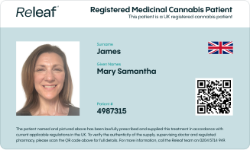
Releaf patients are supported through Releaf’s bespoke, built-from-the-ground-up Patient Dashboard, which manages everything (prescriptions, orders, follow-ups, and more) in one place. You’ll also receive a medical cannabis card for proof of prescription and can choose to join Releaf+ membership for unlimited follow-ups with specialist doctors, free repeats and home delivery, and cheaper medication costs.
As the fastest-growing and most trusted medical cannabis clinic in the UK, Releaf provides evidence-led, GMC-guided care for eligible patients.
If you would like to know more, head to Releaf’s medical cannabis eligibility checker. It’s free, takes less than 20 seconds, and gives you a clearer idea of your potential eligibility.
Releaf - Let’s Rethink Healthcare
Did you like this article?
It is important to seek medical advice before starting any new treatments. The patient advisors at Releaf are available to provide expert advice and support. Alternatively, click here to book a consultation with one of our specialist doctors.

Education Categories
Cannabis 101
Studies & Research
Travel
Further reading

Can medical cannabis and CBD support people with sleep apnoea (updated)?
Sleep apnoea can affect concentration, energy levels and overall wellbeing. This updated guide explains how medical cannabis and CBD may support people living with sleep apnoea, what current research shows and how treatment works in the UK. It also covers risks, product types and the role of established treatments such as CPAP.
Sam North

Cannabis and CBD for acne: evidence, treatments and safety (Updated)
Recent studies show that CBD and other cannabinoids may help reduce acne by balancing sebum production, calming inflammation and supporting skin repair. This guide examines the science, safety and access to medical cannabis treatments for acne in the UK.
Lucy MacKinnon

5 ways CBD supports skin health: newest research and benefits explained
CBD is being actively studied for its effects on skin health, from inflammation and acne to itch relief, infections, hydration, and anti-ageing. This guide reviews the newest 2025 research, practical benefits, and potential risks, so you can make an informed choice about whether CBD may support your skin.
Sam North