Fibromyalgia is a chronic, long-lasting condition that alters the way the central nervous system processes pain signals. Medical cannabis for fibromyalgia has been associated with managing several of the symptoms associated with the condition, including poor sleep, anxiety and “fibro fog”.
What do fibromyalgia patients report from prescribed medical cannabis treatment in the UK?
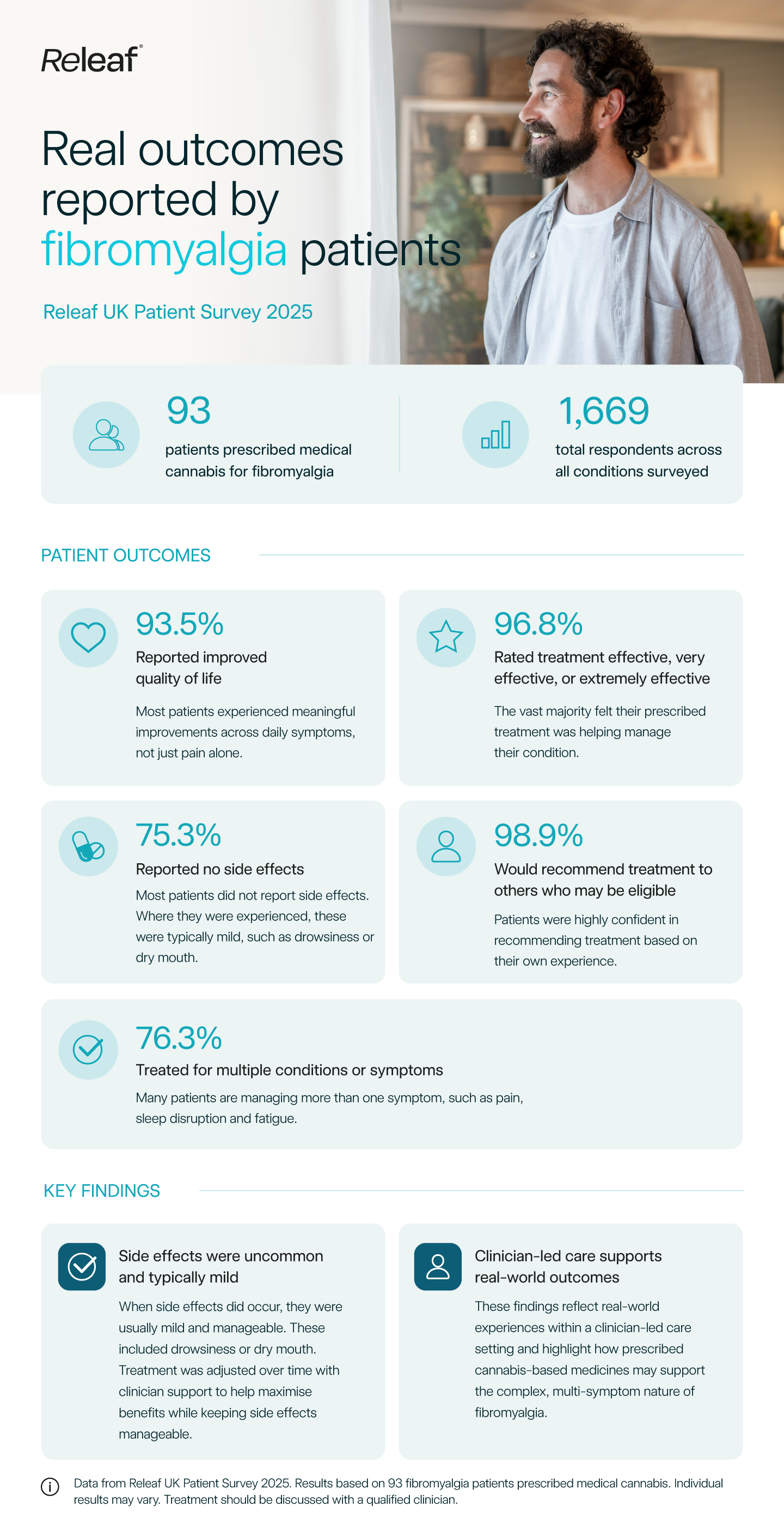
In November 2025, Releaf commissioned and conducted the largest ever survey of active medical cannabis patients in the UK, with 1,669 respondents. Within this group, 93 patients had been prescribed treatment for fibromyalgia, and their self-reported outcomes were consistently strong across multiple symptoms.
Fibromyalgia is rarely a single-symptom condition. Many patients manage pain, fatigue, sleep disruption and cognitive symptoms at the same time, and the outcomes reported reflect this complexity.
The table below is based on the self-reported outcomes from the 93 fibromyalgia patients within the survey cohort.
|
Outcome reported by fibromyalgia patients
|
Percentage
|
What this may mean for your treatment
|
|
Improved quality of life
|
93.5%
|
Most patients experienced meaningful improvements across daily symptoms, not just pain alone
|
|
Treatment rated as “effective”, “very effective”, or “extremely effective”
|
96.8%
|
The vast majority of respondents felt their prescribed treatment was helping manage their condition
|
|
No side effects
|
75.3%
|
Most patients did not report side effects. Where they did, these were typically mild, such as drowsiness or dry mouth
|
|
Would recommend to other patients who may be eligible
|
98.9%
|
Patients were highly confident in recommending treatment based on their own experience
|
|
Treatment used to manage multiple conditions or symptoms
|
76.3%
|
Many patients take treatment to manage more than one symptom, such as pain, sleep disruption and fatigue
|
For patients who experienced side effects, these were most often managed through clinician-led dose adjustments, changes in the cannabinoid ratio of their prescribed treatment options or by adapting how and when treatment was administered.
Treatment was adjusted over time with specialist clinician support to help maximise benefits while keeping any side effects well managed and tolerated.
These findings reflect real-world patient experiences within a clinician-led care setting and highlight how prescribed cannabis-based medicines may support the complex, multi-symptom nature of fibromyalgia as part of a wider treatment plan, particularly where conventional treatments have not provided consistent relief.
Medical cannabis is not suitable for all UK patients and requires assessment by a specialist clinician.
What is fibromyalgia? Symptoms, causes, and diagnosis
Fibromyalgia is a long-term medical condition that causes pain and tenderness throughout the body. It’s also commonly associated with several other symptoms, including fatigue, sleep disorders, cognitive dysfunction, anxiety and depression.
Estimated to affect nearly 1 in 20 people in the UK, fibromyalgia is a form of chronic pain seen much more commonly in women than men. But it can affect anyone of any age, including children.
Alongside widespread pain, many people with fibromyalgia experience symptoms like:
-
muscle stiffness
-
increased sensitivity to stimuli, such as touch, light, temperature or noise
-
fatigue
-
poor sleep
-
problems with memory or concentration (often referred to as “fibro fog”)
-
headaches
-
dizziness and clumsiness
For many people, these symptoms overlap and fluctuate day to day, making consistent symptom control difficult. And because these symptoms can overlap and mimic several other conditions, fibromyalgia is still widely misunderstood and can be difficult to diagnose.
What causes fibromyalgia?
The exact cause of fibromyalgia isn’t clear in most cases. However, it’s thought to be associated with changes in how the central nervous system processes the pain messages it sends around the body.
Many researchers believe that fibromyalgia develops when nerves become affected in a way that causes the brain and spinal cord to change. This leads to an abnormal increase in certain chemicals within the brain, causing it to amplify pain signals more than usual.
In practice, this means sensations that might not normally feel especially painful may be experienced much more intensely.
Several factors could result in these changes:
-
Genetics: While no single gene has been identified as causing the condition, fibromyalgia can run in families and be passed on from parents
-
Infections: Some people develop fibromyalgia symptoms after an illness or infection, although these aren’t thought to be a direct cause
-
Physical or emotional stress: Events that cause physical trauma or psychological stress may trigger fibromyalgia symptoms in some people
-
Other medical conditions: Research shows an increased risk of fibromyalgia if you have osteoarthritis, rheumatoid arthritis, lupus or obesity
While these factors may all increase your risk of fibromyalgia, the condition doesn’t have one clear cause and is likely to develop through a combination of biological, psychological and environmental factors.
How is fibromyalgia diagnosed?
Diagnosing fibromyalgia can be difficult, as there’s no single blood test, scan or imaging test available to confirm the condition.
Symptoms of fibromyalgia also vary from person to person, and often mimic other conditions. For some people, it can take years before the condition is identified clearly.
That said, fibromyalgia diagnoses will normally be made based on the symptoms you have, how long you’ve had them (symptoms normally need to have been present at a similar level for at least three months) and any other possible conditions that have already been ruled out.
Clinicians will then use recognised diagnostic criteria (such as the Widespread Pain Index and Symptom Severity Scale) to assess the extent and distribution of your pain, alongside other common symptoms such as fatigue, sleeping difficulties and cognitive-related issues.
What are the conventional treatments for fibromyalgia, and why do they sometimes fall short?
Fibromyalgia is a complex condition which affects everyone differently. In other words, what works for one person may do very little for someone else.
Even when treatment does work, the results may only be partial. You might sleep a little bit better, but still feel exhausted. Your pain might ease, but “fibro fog” may still make day-to-day activities difficult. The results vary from person to person.
And unfortunately, there is no cure for fibromyalgia, so conventional treatments usually aim to manage the symptoms it’s associated with. This often means trying a mixture of approaches.
|
Type of treatment
|
Summary
|
Why might it fall short?
|
|
Personalised exercise therapy (including gentle exercises like yoga or tai chi)
|
Tailored programmes designed around your needs, abilities and goals to keep you physically active
|
Not suitable for all fibromyalgia patients, with many reporting issues due to increased sensitisation
|
|
Relaxation techniques (i.e. acupuncture)
|
May reduce pain and improve the quality of life in some people with long-term pain
|
Effects have only been shown to last up to three months, and it isn’t always easily accessible for everyone
|
|
Talking therapies (i.e. acceptance and commitment therapy or cognitive behavioural therapy)
|
May help improve certain fibromyalgia symptoms, such as poor sleep, pain and low mood
|
Can be useful for managing the impact of fibromyalgia, but needs to be used alongside other treatments
|
|
Antidepressants (i.e. amitriptyline, citalopram or sertraline)
|
May relieve pain and help improve sleep, emotional health and overall quality of life
|
Antidepressants don’t work for everyone and are associated with various side effects
|
|
Painkillers (i.e. ibuprofen and paracetamol)
|
Sometimes used to offer short-term relief from symptoms
|
Effectiveness is limited, and some common painkillers are not recommended for long-term use
|
Living with fibromyalgia rarely comes with just one symptom, so treatment requires a multi-pronged approach. For many people, managing it becomes a process of trial and error, symptom tracking and finding a combination of different treatments that work.
Take a look at some of our fibromyalgia patient stories for first-hand accounts of the treatment plans that worked for them.
How does medical cannabis help fibromyalgia symptoms?
Medical cannabis may help fibromyalgia symptoms by interacting with the body’s endocannabinoid system. This is a complex cell-signalling network that helps us regulate pain, mood and sleep.
Since fibromyalgia is associated with an increased sensitivity to pain, cannabinoids may help modulate pain signals and ease some of the symptoms linked to the condition.
While research is still ongoing, a growing body of clinical research and real patient experiences shows that cannabis-based medicinal products can improve symptoms like inflammation, sleep, anxiety and overall quality of life in some patients.
A Releaf cannabis-based treatment prescription will provide you with your very own Releaf medical cannabis card, which offers secure proof of your legal legitimacy to carry and consume medical cannabis.
Releaf+ members also have access to Releaf Protect, a 24/7 hotline that offers legal support designed to help patients understand and respond to common legal issues should they be stopped and questioned by the authorities.
The endocannabinoid system and fibromyalgia
The endocannabinoid system is a natural signalling system that plays a key role in many physiological processes, such as pain perception, mood regulation and inflammation.
These effects are crucial for people living with fibromyalgia. Alongside widespread pain, many patients will also experience symptoms like poor sleep, fatigue, low mood and cognitive difficulties.
Because the endocannabinoid system helps maintain balance across these processes, researchers believe it may play an important role in how fibromyalgia develops and the symptoms it’s associated with.
This is one of the main reasons medical cannabis is often touted as an alternative treatment for fibromyalgia patients.
How do THC and CBD work differently for fibromyalgia?
Medical cannabis contains two main active ingredients: tetrahydrocannabinol (THC) and cannabidiol (CBD).
THC is the compound responsible for the psychoactive effects associated with cannabis. It works by interacting with CB1 receptors in the brain, influencing the release of neurotransmitters like dopamine which contribute to feelings of relaxation and euphoria.
For this reason, THC may be able to help manage fibromyalgia symptoms by interacting with the body’s endocannabinoid system and modulating factors like pain, sleep and mood.
CBD works slightly differently. While it may have the same molecular formula (but differing chemical structure) as THC, CBD doesn’t produce a ‘high’ sensation or directly engage with the endocannabinoid system in the same way.
Instead, CBD is better known for its potential anti-inflammatory and pain-relieving properties, as well as its ability to increase levels of a neurotransmitter called anandamide.
This has been shown to help fibromyalgia patients in various ways, offering improved mood regulation, reduced anxiety levels and better overall pain management.
Most types of medical cannabis for fibromyalgia will use a combination of THC and CBD, at a dose tailored to your individual needs and symptoms.
What’s the ideal strength of CBD oil for fibromyalgia? Check out our detailed guide or head to our medical cannabis knowledge hub for more explainers on cannabis-based treatments for fibromyalgia.
Which fibromyalgia symptoms can medical cannabis help?
Since fibromyalgia is associated with a wide variety of symptoms, many patients wonder which specific areas medical cannabis may be able to offer support.
Here’s a detailed symptom-by-symptom breakdown of the difference medical cannabis may be able to make.
|
Symptom
|
How it affects daily life
|
How medical cannabis may help
|
|
Widespread pain
|
Constant aching, tenderness and flare-ups can make walking, chores and physical tasks harder
|
Cannabinoids act on pathways involved in pain processing, offering short-term pain relief for chronic pain
|
|
Fatigue
|
You may wake up exhausted and struggle to keep up with work, routines or everyday responsibilities
|
While medical cannabis doesn’t treat fatigue directly, some people may feel less drained during the day when other symptoms like pain and sleep improve
|
|
Fibro fog
|
Poor concentration, slower thinking and memory lapses can make planning and multitasking harder
|
Improved sleep and lower pain may help some people to think more clearly, although this isn’t a proven direct effect yet
|
|
Sleep disturbance
|
Difficulty falling asleep, staying asleep, or waking refreshed can worsen pain and exhaustion
|
Studies suggest that sleep may improve for some fibromyalgia patients when taking medical cannabis
|
|
Anxiety and depression
|
Living with constant symptoms can take a real emotional toll and affect mood, stress levels and confidence
|
Studies show improvements in anxiety and overall quality of life. CBD is often discussed, but responses can vary from person to person
|
|
IBS and digestive issues
|
Bloating, abdominal pain and irregular bowel habits can add another layer of discomfort
|
Some research suggests medical cannabis may help abdominal pain, cramping and diarrhoea by interacting with the body's endocannabinoid system to modulate gut motility
|
Head to our medical cannabis eligibility checker to see whether medical cannabis treatment could help with your symptoms. It’s free, takes under 20 seconds and offers a clear first step towards understanding your options.
What does the UK research say about medical cannabis for fibromyalgia?
Research shows that fibromyalgia can have a major impact on patient quality of life, daily function and the time it takes to get a diagnosis. This explains why there’s such a push within current clinical research to explore the potential benefits of alternative treatment options, such as medical cannabis.
Early studies into this area suggest that medical cannabis may help to reduce pain, improve sleep, ease anxiety and support a better quality of life for fibromyalgia patients.
But the evidence is continuously evolving, and larger clinical trials are still needed to prove its true effectiveness.
Here’s a snapshot of some of the most relevant studies so far:
|
Name of study
|
Year of publication
|
Results
|
|
Cannabis for the Treatment of Fibromyalgia: A Systematic Review
|
2023
|
This review found promising but low-quality evidence that cannabis-based treatments may help with short-term pain relief in fibromyalgia. It also suggested possible benefits for sleep, mood and quality of life, but said the evidence is not yet definitive.
|
|
Cannabinoids for fibromyalgia pain: a critical review of recent studies (2015–2019)
|
2020
|
This review concluded that medical cannabis appears promising for fibromyalgia pain. But major study limitations mean no firm conclusions can be drawn yet.
|
|
Assessment of clinical outcomes in patients with fibromyalgia: Analysis from the UK Medical Cannabis Registry
|
2023
|
This UK registry study found improvements in pain, sleep, anxiety and quality of life in fibromyalgia patients prescribed medical cannabis. While it adds strong real-world evidence, it’s an observational study, so it cannot prove cause and effect.
|
|
Is Medical Cannabis a Solution for Controlling Fibromyalgia Symptoms?
|
2024
|
This paper presents medical cannabis as a potential option worth considering, but not a definite answer. Its overall message is balanced: the field is promising, but the evidence base is still incomplete.
|
|
A Systematic Review of Fibromyalgia and Recent Advancements in Treatment: Is Medicinal Cannabis a New Hope?
|
2021
|
This review suggested that medical cannabis may be a safe and effective treatment option, especially for pain. It also stresses that more research is needed on dosing, treatment length, adverse effects and long-term outcomes.
|
Across these studies, a consistent pattern becomes clear to see. Improvements are most often reported in pain, sleep, and overall quality of life.
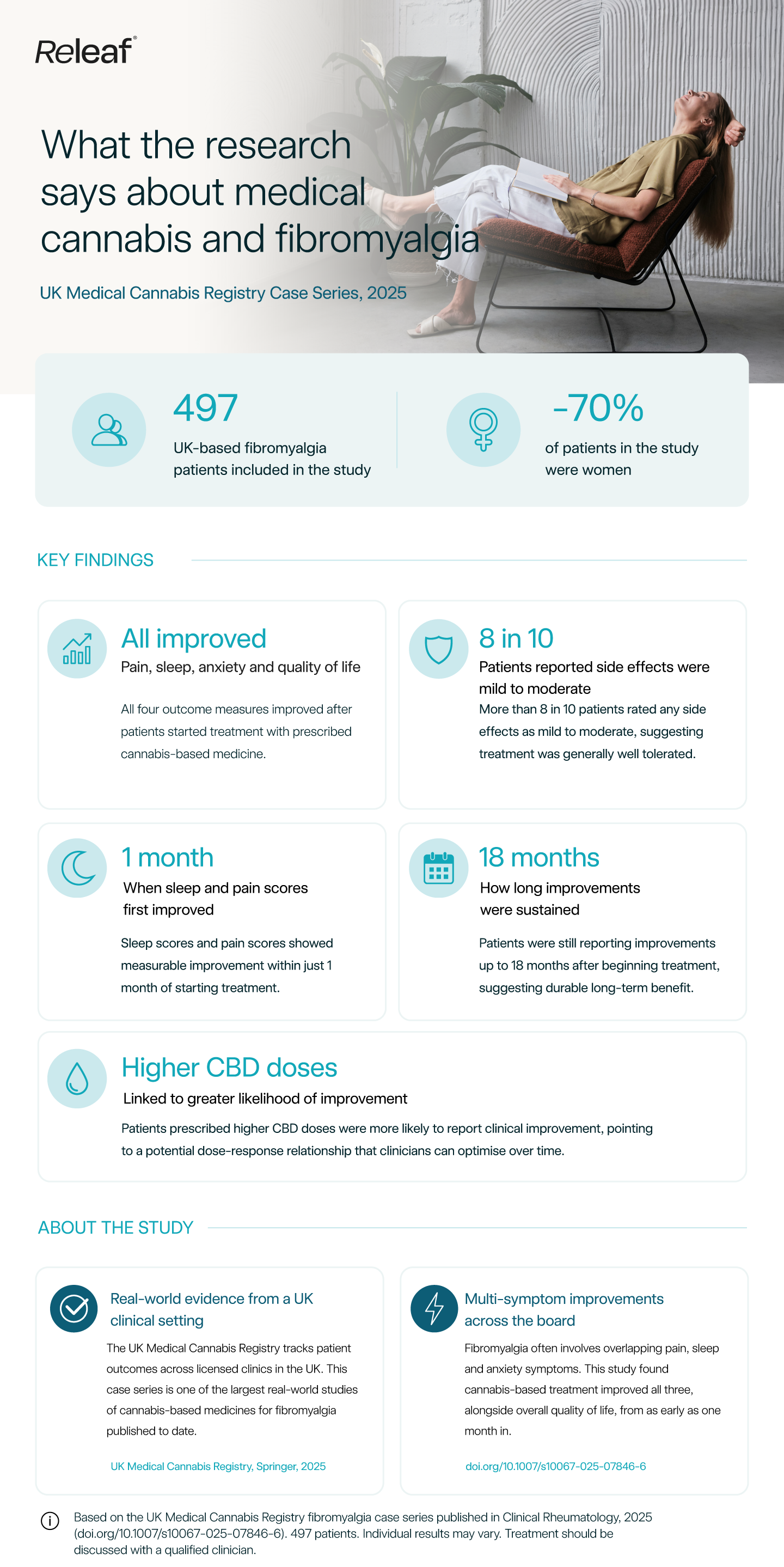
What does the UK Medical Cannabis Registry show for fibromyalgia?
The UK Medical Cannabis Registry published its case series late last year, which revealed a number of interesting findings:
Current limitations and ongoing research
The current evidence base still has several limitations it’s important to be aware of.
For instance, many of the studies mentioned above were small, featured different cannabis formulations and dosages or only followed patients for a short period of time.
This makes it harder to draw firm conclusions, even when the overall trend and potential for fibromyalgia symptom management are showing a lot of promise.
You should always seek advice from a medical professional before considering adding medical cannabis to your fibromyalgia treatment plan. Speak to one of our consultants today.
What can you expect from fibromyalgia treatment at Releaf?
Here at Releaf, ourworld-class clinical team of specialist medical cannabis consultants are always on hand to discuss your symptoms and determine whether medical cannabis could be a suitable treatment option for you.
As the most trusted medical cannabis clinic in the UK, we provide regulated prescriptions, consistent access to high-quality medication and offer a UK-based clinical and support team that puts your health first.
Here’s a step-by-step guide to how our process works:
Step 1: Eligibility check via online questionnaire (5 mins)
Start by answering a few quick questions about your condition, symptoms and medical history. It only takes a few minutes, it’s free and it’ll help confirm whether you’re suitable for a consultation.
Step 2: Video consultation with specialist (15 – 30 mins)
If you’re eligible, you can book a private video consultation with a UK-registered doctor matched to your condition. Your appointment costs £99.99, and if you’re not eligible, that fee is refunded in full.
Step 3: Prescription (if applicable) (same-day release)
If medical cannabis is clinically appropriate, your doctor will create a personalised treatment plan based on your symptoms, lifestyle and previous treatments. This may include cannabis oil, dried flower or both, with tailored THC and CBD levels.
Step 4: Delivery (within 2 working days*)
Once your prescription has been approved, you can place your order through the Releaf platform and have your medication delivered directly to your door. Medication starts from £7.99 per gram or £134.99 for 30ml of oil, and delivery is completely free if you’re a Releaf+ member.
Step 5: Ongoing care (continuous)
Your treatment doesn’t stop after your first prescription. With regular follow-ups and ongoing support, your care team will review your progress, adjust your prescription as required and help build a treatment plan around your needs.
Fancy free follow-up consultations, free prescription charges and free delivery? Sign up to Releaf+ for just £39.99 per month to make the most out of your prescription.
Your consultation: what to expect
Starting any new fibromyalgia treatment can feel daunting, especially when you’re unsure whether medical cannabis is right for you.
At Releaf, we make the process simple, supportive and personal from your very first appointment.
-
Virtual consultation: Speak to a UK-registered doctor from the comfort of your own home
-
Condition-led care: You’ll be matched with a clinician who understands fibromyalgia and the symptoms associated with it
-
Personalised treatment plan: If you’re eligible, we will recommend a treatment plan tailored around your needs, lifestyle and previous medical history
-
An opportunity to ask questions: Talk to us about your symptoms, concerns and side effects, and understand what medical cannabis treatment will realistically look like for you
-
No waiting list: If medical cannabis is appropriate for your needs, we will move you forward and get a prescription sent out as quickly as possible
Medication delivery and ongoing care
If you are eligible to receive medical cannabis as part of your fibromyalgia treatment, your specialist will discuss the different medical cannabis flower and oil options that are available with you before issuing a provisional prescription.
This prescription will then be sent to our Multidisciplinary Team (MDT) for approval.
At Releaf, our MDT is made up of prescribing specialists, GPs, nurses and patient support experts, who all work together to ensure that every prescription meets the highest medical and regulatory standards.
During the review process, the MDT will:
-
Review your prescription to confirm it has the potential ability to help with your medical history and condition
-
Ensure all regulatory guidelines are met, which then helps prevent any issues with pharmacy dispensing
-
Double-check potential interactions with any existing medications you may be taking
Once your prescription has been approved and paid for, it will be sent to our pharmacy, which will then dispense and dispatch your medication.
We ship all prescription medications via tracked delivery, which should arrive discreetly at your door within 2 working days. *Prescription and consultation queries or stock issues may cause slight delays.
Medical cannabis from Releaf is not a one-off prescription. It is an ongoing, specialist-led care programme designed to keep your treatment effective, appropriate and personalised over time.
What are the side effects of medical cannabis for fibromyalgia?
The most common side effects when taking medical cannabis for fibromyalgia are drowsiness, dry mouth and dizziness. Some patients also report:
These side effects are often mild and will vary depending on the product and the THC: CBD ratio. They also won’t affect everyone.
According to Releaf’s medical cannabis patient survey for 2025, 63.2% of chronic pain patients reported no side effects. Of those who did, only 1.6% rated them as “significant”, with 54.2% saying side effects were managed effectively by adjusting the dosage.
This is one of the reasons why your consultant will work closely with you throughout your medical cannabis journey, starting your treatment at a low dose and adjusting it gradually over time.
Medical cannabis can interact with other medicines, so it’s important to tell your doctor about all the medications you are taking before you start treatment.
Who should not use medical cannabis for fibromyalgia?
Medical cannabis is not suitable for everyone.
For instance, it should be avoided if you are currently pregnant or breastfeeding. Anyone with a history of psychosis or severe mental health problems should also speak to their clinical team before deciding to start treatment.
Since THC-containing products may carry a small risk of dependency, people with a history of substance misuse may also need to have a more thorough assessment to deem eligibility.
Getting a medical cannabis prescription from Releaf includes regular reviews and specialist-led dose adjustments to offer complete peace of mind.
Am I eligible for medical cannabis for fibromyalgia?
Yes, fibromyalgia is an eligible condition for medical cannabis in the UK through private, CQC-regulated clinics, such as us at Releaf.
To qualify, you will need to have a confirmed fibromyalgia diagnosis and have already tried at least two conventional treatments beforehand.
We always assess medical cannabis eligibility on an individual basis. That means we will take a detailed medical history from you, assessing your symptoms, previous treatments and any possible contraindications before making a decision.
Did you know?
99% of consultations result in a prescription and your very own Releaf medical cannabis card for fibromyalgia. Even if you’re not eligible, you will receive a full refund for the cost of your first consultation, thanks to our money-back guarantee.
Frequently asked questions about fibromyalgia and medical cannabis
If you’d like to learn more about medical cannabis and fibromyalgia, we’ve got you covered. Here are some of the questions our consultants get asked most often.
Can you get medical cannabis for fibromyalgia on the NHS?
No, it’s extremely unlikely you’d be able to get medical cannabis for fibromyalgia from the NHS.
The NHS currently only prescribes medical cannabis for three specific conditions: severe forms of epilepsy, chemotherapy-induced nausea and multiple sclerosis-related muscle stiffness.
While legal, fibromyalgia patients will typically need to use a CQC-regulated private clinic like Releaf to obtain a medical cannabis prescription in the UK.
What is the best treatment for fibromyalgia pain?
There is no single best treatment for fibromyalgia pain. Every patient is different, so managing it effectively relies on adopting a combination approach that uses various treatments.
Recent data from the UK Medical Cannabis Registry suggests that medical cannabis may help as part of this approach.
Other treatments like exercise, talking therapies and relaxation techniques should also be used alongside as part of a consultant-led treatment plan.
What are the 7 signs of fibromyalgia?
The 7 key signs of fibromyalgia include widespread pain, fatigue, poor sleep, cognitive issues (often referred to as “fibro fog”), headaches, IBS and sensitivity.
If you are concerned about any of these symptoms, it’s important to speak to a medical professional.
How is fibromyalgia diagnosed?
Fibromyalgia is difficult to diagnose as its symptoms can mimic several other conditions and vary from person to person. There is also no single test that can be used to confirm it.
Instead, your GP will typically start by discussing your symptoms and running several tests to identify the root cause. In doing so, this will enable them to rule out certain other potential conditions.
If they suspect you might have fibromyalgia, they will likely use the Widespread Pain Index (WPI) and Symptom Severity Scale (SSS) to analyse your chronic pain and other associated symptoms. They will then be able to make a diagnosis based on these results.
Does fibromyalgia ever go away?
Unfortunately, there is still no cure for fibromyalgia, and it is unlikely to ever go away completely.
However, its symptoms can be managed effectively with the right treatment plan, and it is possible to go into periods of remission where you remain symptom-free for long periods of time.
What is the difference between medical cannabis and recreational cannabis for fibromyalgia?
Medical cannabis is very different from recreational cannabis.
When medical cannabis is prescribed to an eligible patient, it’s used as a targeted, clinician-led therapy to help manage chronic pain. It’s also introduced at low doses and tailored to meet the individual needs of patients over time.
Recreational cannabis offers much less control, lacks medical supervision and may not provide the same therapeutic benefits.
Releaf - Let’s rethink healthcare